Contact us
Post contents
There are moments in the history of major economies when a country radically redefines itself, and Saudi Arabia is currently experiencing such a moment—one that stems from a conscious, internal will rather than from a collapse or an urgent necessity.
Since the launch of Vision 2030 in 2016, an economic restructuring program has been launched that is unparalleled in the region in terms of scale, speed, and boldness. The stated goal: to reduce dependence on oil from 70% of government revenue to less than 30% by 2030, and to build a productive, diversified economy capable of creating millions of new jobs in non-oil sectors. and it is this ambition, in and of itself, that makes the Kingdom a unique investment destination in the Middle East today.
However, this vision is not merely a slogan; it has translated into a system of legal, regulatory, and social reforms that have redrawn the landscape of opportunities for foreign investors—from amending the foreign investment law, to the opening of sectors that were historically off-limits, to the launch of mega-projects with investments exceeding two trillion dollars.
First: Foreign Direct Investment—What Makes It a Driver of Growth?
Foreign direct investment (FDI) is not merely capital crossing borders; at its core, it is a systematic transfer of knowledge, technology, management practices, and access to global markets. When a foreign company establishes a factory or project in Riyadh, it brings not only millions, but also supply chains, quality standards, training programs for local personnel, and export networks.
Foreign investment in the Kingdom is doubly important: on the one hand, it accelerates the economic diversification the government is striving for, and on the other, it serves as an indicator of international markets’ confidence in the reform process, The government has recognized this well and has poured massive investments into improving the business environment in recent years.
Second: Regulatory and Legal Benefits
100% Foreign Ownership
Under the previous foreign investment regime, investors were required to have a Saudi partner who owned at least 25%. Today, however, foreign companies can own 100% of the capital in most sectors, including retail, distribution, manufacturing, professional services, healthcare, entertainment, and tourism, This means full control over business decisions, profits, and expansion without the need to negotiate with local parties.
International Legal Protection
The Kingdom guarantees foreign investors protection against nationalization or expropriation, except pursuant to an independent judicial decision and fair compensation, It has signed bilateral investment treaties with more than 26 countries and is a party to the ICSID Convention, which provides a neutral international forum for resolving any disputes.
Tax Incentives
There is no personal income tax in the Kingdom. The corporate tax rate is 20%, which is competitive by regional and international standards. Most importantly, special economic zones such as NEOM exempt companies from this tax for periods of up to 50 years and exempt them from import and export duties.
Third: Economic Benefits
A massive domestic market with exceptional purchasing power
The Kingdom is home to 35 million people, the majority of whom are young, with an average age of 31 and a per capita income exceeding $30,000 annually. This demographic profile creates massive consumer demand in the entertainment, tourism, restaurant, and technology sectors—sectors that are now opening their doors to foreign investors.
Geographic Location — An Unparalleled Gateway
The Kingdom is located at the crossroads of three continents and is within an eight-hour flight of 1.5 billion consumers in Europe, Africa, and South Asia, making it an ideal platform for accessing markets with a combined total of 3 billion consumers.
Economic and Political Stability
The riyal has been pegged to the dollar since 1986, foreign reserves exceed $450 billion, public debt is relatively low, and major rating agencies such as Moody’s and Fitch classify Saudi sovereign debt as investment grade.
Fourth: Promising Investment Opportunities
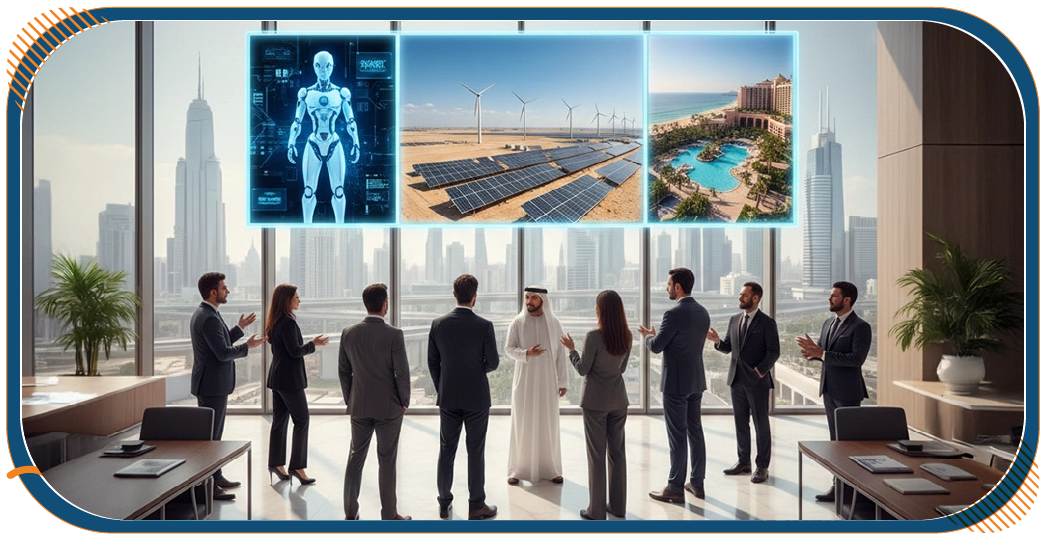
- Neom and the New Cities: A $500 billion government investment requires partners in construction, technology, and smart infrastructure.
- Tourism and Hospitality: A target of 150 million tourist visits by 2030, with a massive gap in the capacity of hotels and resorts.
- Renewable Energy: The goal of 50% renewable energy by 2030 opens up a market estimated at more than $100 billion.
- Technology and Artificial Intelligence: Investments in data infrastructure and the establishment of data centers, along with incentives for technology companies.
- Healthcare: Increasing the private sector’s share from 40% to 65% paves the way for digital hospitals and healthcare services.
- Mining and Manufacturing: Mineral resources valued at more than one trillion dollars await partnerships with foreign expertise.
Fifth: Government Support — Institutions, Not Slogans
The Saudi Investment Authority provides centralized services for company formation, licensing, and legal consulting. The Public Investment Fund, with assets exceeding $900 billion, serves as a potential strategic partner for any major project. The Regional Headquarters Program offers exceptional tax and regulatory incentives to international companies that relocate their headquarters to Riyadh. In addition, companies can be registered in just a few days through integrated digital platforms.
Conclusion
When an international investor evaluates an investment destination, they look for a combination of three factors: market size, a stable regulatory environment, and the presence of genuine structural growth drivers. Today, Saudi Arabia offers all three at once.
Legal reforms have provided a reliable regulatory framework; the size of the economy and purchasing power ensure a domestic market with real depth; and major projects—from NEOM to Al-Qiddiya—represent tangible opportunities, not vague promises.
Challenges do exist—Saudization requirements and the regulatory transition phase call for careful analysis and advance planning; however, investors who come prepared will find themselves facing a historic investment opportunity that rarely comes along.
Saudi Arabia offers more than just a market—it offers a partnership in rebuilding the Gulf economy from within.
Related Posts

There are moments in the history of major economies when a country radically redefines itself, and Saudi Arabia is currently experiencing such a moment—one that stems from a conscious, internal will rather than from a collapse or an urgent necessity.
Since the launch of Vision 2030 in 2016, an economic restructuring program has been launched that is unparalleled in the region in terms of scale, speed, and boldness. The stated goal: to reduce dependence on oil from 70% of government revenue to less than 30% by 2030, and to build a productive, diversified economy capable of creating millions of new jobs in non-oil sectors. and it is this ambition, in and of itself, that makes the Kingdom a unique investment destination in the Middle East today.
However, this vision is not merely a slogan; it has translated into a system of legal, regulatory, and social reforms that have redrawn the landscape of opportunities for foreign investors—from amending the foreign investment law, to the opening of sectors that were historically off-limits, to the launch of mega-projects with investments exceeding two trillion dollars.
First: Foreign Direct Investment—What Makes It a Driver of Growth?
Foreign direct investment (FDI) is not merely capital crossing borders; at its core, it is a systematic transfer of knowledge, technology, management practices, and access to global markets. When a foreign company establishes a factory or project in Riyadh, it brings not only millions, but also supply chains, quality standards, training programs for local personnel, and export networks.
Foreign investment in the Kingdom is doubly important: on the one hand, it accelerates the economic diversification the government is striving for, and on the other, it serves as an indicator of international markets’ confidence in the reform process, The government has recognized this well and has poured massive investments into improving the business environment in recent years.
Second: Regulatory and Legal Benefits
100% Foreign Ownership
Under the previous foreign investment regime, investors were required to have a Saudi partner who owned at least 25%. Today, however, foreign companies can own 100% of the capital in most sectors, including retail, distribution, manufacturing, professional services, healthcare, entertainment, and tourism, This means full control over business decisions, profits, and expansion without the need to negotiate with local parties.
International Legal Protection
The Kingdom guarantees foreign investors protection against nationalization or expropriation, except pursuant to an independent judicial decision and fair compensation, It has signed bilateral investment treaties with more than 26 countries and is a party to the ICSID Convention, which provides a neutral international forum for resolving any disputes.
Tax Incentives
There is no personal income tax in the Kingdom. The corporate tax rate is 20%, which is competitive by regional and international standards. Most importantly, special economic zones such as NEOM exempt companies from this tax for periods of up to 50 years and exempt them from import and export duties.
Third: Economic Benefits
A massive domestic market with exceptional purchasing power
The Kingdom is home to 35 million people, the majority of whom are young, with an average age of 31 and a per capita income exceeding $30,000 annually. This demographic profile creates massive consumer demand in the entertainment, tourism, restaurant, and technology sectors—sectors that are now opening their doors to foreign investors.
Geographic Location — An Unparalleled Gateway
The Kingdom is located at the crossroads of three continents and is within an eight-hour flight of 1.5 billion consumers in Europe, Africa, and South Asia, making it an ideal platform for accessing markets with a combined total of 3 billion consumers.
Economic and Political Stability
The riyal has been pegged to the dollar since 1986, foreign reserves exceed $450 billion, public debt is relatively low, and major rating agencies such as Moody’s and Fitch classify Saudi sovereign debt as investment grade.
Fourth: Promising Investment Opportunities
- Neom and the New Cities: A $500 billion government investment requires partners in construction, technology, and smart infrastructure.
- Tourism and Hospitality: A target of 150 million tourist visits by 2030, with a massive gap in the capacity of hotels and resorts.
- Renewable Energy: The goal of 50% renewable energy by 2030 opens up a market estimated at more than $100 billion.
- Technology and Artificial Intelligence: Investments in data infrastructure and the establishment of data centers, along with incentives for technology companies.
- Healthcare: Increasing the private sector’s share from 40% to 65% paves the way for digital hospitals and healthcare services.
- Mining and Manufacturing: Mineral resources valued at more than one trillion dollars await partnerships with foreign expertise.
Fifth: Government Support — Institutions, Not Slogans
The Saudi Investment Authority provides centralized services for company formation, licensing, and legal consulting. The Public Investment Fund, with assets exceeding $900 billion, serves as a potential strategic partner for any major project. The Regional Headquarters Program offers exceptional tax and regulatory incentives to international companies that relocate their headquarters to Riyadh. In addition, companies can be registered in just a few days through integrated digital platforms.
Conclusion
When an international investor evaluates an investment destination, they look for a combination of three factors: market size, a stable regulatory environment, and the presence of genuine structural growth drivers. Today, Saudi Arabia offers all three at once.
Legal reforms have provided a reliable regulatory framework; the size of the economy and purchasing power ensure a domestic market with real depth; and major projects—from NEOM to Al-Qiddiya—represent tangible opportunities, not vague promises.
Challenges do exist—Saudization requirements and the regulatory transition phase call for careful analysis and advance planning; however, investors who come prepared will find themselves facing a historic investment opportunity that rarely comes along.
Saudi Arabia offers more than just a market—it offers a partnership in rebuilding the Gulf economy from within.